

In the digital age, communication has become instant, continuous, and global. Whether it is customer service, online businesses, social media creators, or everyday individuals, the phrase “sorry for the inconvenience” has become one of the most commonly used expressions worldwide. While short and simple, it carries deep meaning in professional and personal conversations.
This article explores everything you need to know about the phrase “sorry for the inconvenience”—its usage, real-world applications, benefits, alternatives, examples, and how brands can use it to improve trust and customer satisfaction.
By the end of this 3000+ word article, you will understand why “sorry for the inconvenience” is more than just a polite phrase—it’s a powerful communication tool.
What Does “Sorry for the Inconvenience” Really Mean?
At its core, the phrase “sorry for the inconvenience” is an apology. But it is not just any apology—it acknowledges that your actions, delays, or mistakes caused discomfort, frustration, or disruption to someone else.
The phrase is generally considered formal, professional, and polite, making it suitable for both business and personal interactions. It is often used when someone experiences:
-
Delays
-
Technical issues
-
Service interruptions
-
Errors
-
Miscommunication
-
Unexpected changes
When used correctly, “sorry for the inconvenience” can diffuse tension, maintain trust, and show empathy.
Why Do People Use “Sorry for the Inconvenience”?
There are many reasons why individuals, businesses, and organizations use this phrase. Some of the top motivators include:
1. To Maintain Professionalism
Whether in emails, customer service chats, or corporate notices, saying “sorry for the inconvenience” signals respect and professionalism.
2. To Show Empathy
People appreciate acknowledgment. Using the phrase shows you understand their frustration and value their time.
3. To Calm Down Angry or Confused Customers
In customer service, a simple apology can prevent escalations. The phrase “sorry for the inconvenience” serves as a soft buffer.
4. To Follow Communication Etiquette
In business communication, offering apologies for mistakes is standard etiquette. This phrase helps maintain positive brand image.
Situations Where “Sorry for the Inconvenience” Is Commonly Used
The phrase appears in dozens of industries and situations. Here are the most common ones:
1. Customer Support
When customers face issues like slow delivery, website errors, or wrong orders, companies often respond with “sorry for the inconvenience.”
2. Technical Problems
IT teams and SaaS companies frequently use this phrase during downtime or maintenance.
3. Transport & Travel
Airlines, railways, and taxi services use it when delays occur.
4. Healthcare
Hospitals use the phrase when patient appointments get rescheduled.
5. Government and Public Services
Public notices for electricity shutoffs, water shortages, or system errors often include “sorry for the inconvenience.”
Is “Sorry for the Inconvenience” Always Enough?
While polite, the phrase can sometimes feel generic if not used carefully. In some situations, it may sound:
-
Too formal
-
Emotionless
-
Insufficient
-
Overused
To make “sorry for the inconvenience” more impactful, it helps to personalize it, offer solutions, or acknowledge specifics.
How to Use “Sorry for the Inconvenience” Effectively
1. Acknowledge the Issue Clearly
Instead of just saying “sorry for the inconvenience”, mention what went wrong.
Example:
“We are sorry for the inconvenience caused by the payment system error.”
2. Offer a Solution
Customers appreciate actions.
Example:
“Sorry for the inconvenience. Our team is fixing the issue and will update you shortly.”
3. Keep It Sincere
Avoid sounding robotic. Keep the tone genuine.
4. Use It Promptly
Delaying an apology can worsen the situation.
“Sorry for the Inconvenience” in Customer Service (The Ultimate Strategy)
For brands and service teams, this phrase is essential. Here’s how to use it effectively in customer interactions:
1. Start With Recognition
Always start the apology after acknowledging the customer’s issue.
2. Personalize the Response
Use the customer’s name or mention the specific problem.
3. Offer Compensation (If Applicable)
Discounts or freebies can turn a negative experience into a positive one.
4. Close With Courtesy
End the message on a supportive note.
Examples of Using “Sorry for the Inconvenience” in Sentences
Below are practical examples for various scenarios.
Customer Service
-
“We are truly sorry for-the inconvenience caused during your order process.”
-
“Our support team is working on your case. Sorry for-the inconvenience.”
Email Response
-
“Thank you for your patience. We are sorry for-the inconvenience and appreciate your understanding.”
Technical Errors
-
“The website is currently down. We’re sorry for-the inconvenience and working to restore it quickly.”
Delivery Delays
-
“Your package will arrive later than expected. Sorry-for the inconvenience.”
Public Notices
-
“The road will be closed for repairs. Sorry for the-inconvenience and thank you for cooperating.”
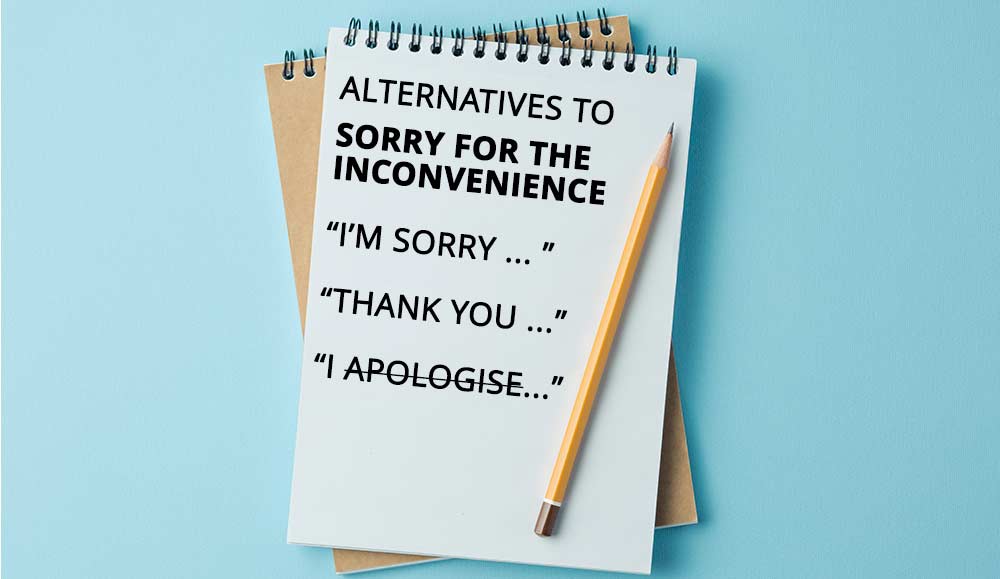
Creative Alternatives to “Sorry for the Inconvenience”
Sometimes you may want to say the same thing with different words. Here are powerful alternatives:
Polite Alternatives
-
“Thank you for your patience during this time.”
-
“We apologize for the delay.”
Stronger Alternatives
-
“We sincerely apologize for this disruption.”
-
“We regret the inconvenience caused.”
Friendly Alternatives
-
“Thanks for bearing with us!”
-
“We’re fixing this as fast as possible—apologies!”
Why Businesses Should Not Overuse the Phrase
Although important, using “sorry for the-inconvenience” too frequently can make it feel meaningless. People may think the company is:
-
Not taking responsibility
-
Not improving
-
Giving generic replies
-
Lacking effort
Instead, companies should pair the apology with real action.
The Psychology Behind “Sorry for the Inconvenience”
Understanding why the phrase works is essential. Psychologically, the phrase:
1. Reduces Frustration
Being acknowledged makes customers feel heard.
2. Builds Trust
People trust brands that admit mistakes.
3. Improves Customer Loyalty
A sincere apology can turn an angry customer into a loyal one.
4. Humanizes Communication
It shows that behind the brand, there are real humans.
Using “Sorry for the Inconvenience” in Personal Life
Although popular in business, the phrase is equally useful in personal situations.
1. Late Replies
“Hey, sorry for the inconvenience, I was busy earlier.”
2. Canceling Plans
“Sorry for the-inconvenience, but I need to reschedule.”
3. Borrowing Items Late
“Sorry for the inconvenience, I’ll return it tomorrow.”
4. Unexpected Delays
“Sorry for the-inconvenience, traffic was crazy today.”
How Social Media Uses “Sorry for the Inconvenience”
Brands and influencers on platforms like Instagram, YouTube, X, TikTok, or Facebook use the phrase frequently.
Common Uses:
-
When uploads are delayed
-
When accounts face technical issues
-
When live streams lag
-
When giveaways are postponed
Example Post:
“Today’s video will be delayed due to editing errors. Sorry for the-inconvenience.”
How to Avoid Misusing the Phrase
Sometimes “sorry for the-inconvenience” is NOT the right choice.
Don’t Use It When:
-
A major mistake requires a bigger apology
-
You caused emotional harm
-
The inconvenience is severe
-
Legal issues are involved
Example of Bad Usage:
“You lost your job? Sorry for the inconvenience.”
(This is inappropriate.)
Long-Form Examples That Use the Phrase Naturally
Here are extended examples (useful for emails, customer replies, etc.):
Professional Email Apology
“Dear Customer,
We are extremely sorry-for the inconvenience caused by yesterday’s system error. Our technical team is already working to fix the issue permanently. Your patience and understanding mean a lot to us.”
Service Failure Apology
“We understand your frustration and are genuinely sorry for the-inconvenience caused due to the delay. We assure you that such issues will not be repeated.”
Public Service Announcement
“The electricity supply in your area will be temporarily suspended for maintenance. We apologize and are sorry for the-inconvenience this may cause.”
Final Thoughts — Why “Sorry for the Inconvenience” Will Always Matter
The phrase “sorry for the inconvenience” remains popular because it is simple, respectful, and effective. Whether you’re a business, a customer service expert, a social media creator, or an everyday individual, this phrase helps maintain positive communication.
It acknowledges mistakes, calms frustration, and shows empathy—all of which are essential for building trust.
As long as humans continue to interact, misunderstandings and issues will arise. That’s why “sorry for the inconvenience” will always remain an important part of polite communication.
